
Standardizing Electrohydraulic Valves: Where D03 and D05 Fit
Posted by Randy Hydrick on Nov 9th 2026
When an electrohydraulic valve fails on a production line, the part number is usually the first thing the maintenance team looks for. If that valve has a long lead time, the next question is whether a more readily available configuration can do the same job. Answering that question starts with understanding what the machine needs from the valve.
Electrohydraulic valves use electrical commands to control hydraulic flow and, in turn, machine motion. In equipment found in sawmills, tire plants, and other industrial facilities, the valve’s flow capacity and response can affect how quickly and accurately a machine moves. That makes replacement a controls decision as well as a hydraulic one.
Why start with D03 and D05?
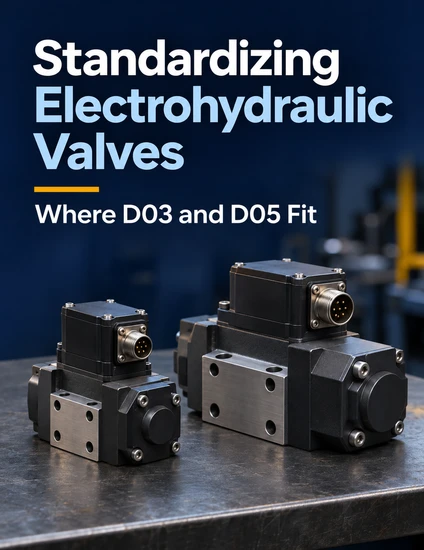
D03 and D05 are common mounting sizes for industrial hydraulic valves. Flow Dynamics has worked with MOOG to identify configurations in these two sizes that can serve as starting points for common motion control applications. When several machines can use the same configuration, a plant may be able to stock fewer spare part numbers and simplify replacement planning.
The mounting size tells you how the valve bolts up. To determine how it will perform, you need the specifications for the exact configuration. MOOG, for example, lists rated flow at a defined pressure drop separately from maximum flow. That distinction matters when comparing two valves for the same machine.
What to check before replacing a valve
- Hydraulic requirements. Verify the required flow at the application’s pressure drop, the pressure limits at each port, and the spool configuration.
- Electrical compatibility. Check the supply voltage, command signal or communication protocol, connector, and pin assignments. Two valves can use the same connector and still require different wiring or signals.
- Machine behavior. Confirm that the replacement meets the machine’s response requirements and behaves as intended when the command signal or power is lost.
- Service and availability. Check the lead time and repair options for the exact configuration you plan to use.
A good place to start is with valves your plant replaces often or struggles to source. Compare the installed configurations across machines and identify where a common spare could work. That review is easier to do while the equipment is running and the maintenance team has time to check the details.
If you’d like help evaluating a valve, email marketing@flowdynamics.net with STANDARDIZE in the subject line. Include the full part number and your typical replacement lead time. A nameplate photo and any available operating details will help us assess the fit.