
Automatic Lubrication: A Small Investment That Can Protect a Lot of Equipment
Posted by Randy Hydrick on Sep 2nd 2026
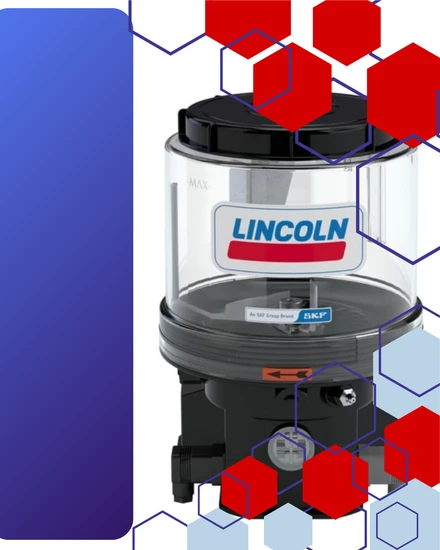
When maintenance teams talk about keeping equipment productive, attention usually goes to the major components: pumps, motors, cylinders, bearings, transmissions, and controls.
But sometimes equipment reliability comes down to something much smaller:
Did the right lubrication point get the right amount of grease at the right time?
That's the problem automatic lubrication systems are designed to address.
At Flow Dynamics, Lincoln lubrication systems provide a proven option for operations looking to improve lubrication consistency, reduce maintenance demands, and protect equipment from premature wear.
The Problem With Manual Lubrication
Manual greasing works—but only when it gets done correctly and consistently.
Maintenance teams have to identify every lubrication point, reach it safely, apply the appropriate lubricant, and deliver the correct quantity at the proper interval.
In a busy operation, several things can happen:
A fitting gets missed. A bearing receives too little grease. Another receives too much. Lubrication gets delayed because the machine is running. A hard-to-reach point is skipped.
One missed lubrication interval may not immediately stop a machine, but repeated lubrication problems can contribute to accelerated wear and eventual component failure.
What Does an Automatic Lubrication System Do?
Instead of relying on an operator or technician to manually grease each lubrication point, an automatic system distributes lubricant from a central source. Lincoln systems can be configured so that pumps, metering devices, lines, and controls deliver measured amounts of lubricant to multiple points throughout a machine.
In Lincoln Quicklub progressive systems, for example, a piston pump supplies lubricant through a main line to metering devices serving individual lubrication points. The system can also be monitored to verify lubrication delivery. The idea is simple: Little amounts. Regularly delivered. Where they're needed.
Why Consistency Matters
There are a number of potential benefits of properly applied automatic lubrication. Frequent, measured lubrication can help extend the life of bearings, gears, and chains while reducing the labor required for manual point-by-point lubrication. Automatic lubrication can also reduce shutdown time required for manual servicing and improve safety by limiting the need for technicians to access difficult lubrication points.
Precise delivery also helps address another common problem: overgreasing. More grease isn't necessarily better.
An appropriately designed system meters lubricant based on what the application requires, reducing unnecessary lubricant consumption, contamination, and spillage.
Where Lincoln Systems Make Sense
Automatic lubrication becomes especially valuable when equipment has:
- Numerous lubrication points
- Components that require frequent lubrication
- Hard-to-access grease fittings
- Continuous operating schedules
- Harsh or contaminated environments
- High downtime costs
- Mobile or heavy equipment operating in the field
Lincoln lubrication solutions are used across applications including automotive, agriculture, heavy equipment, commercial vehicles, and industrial operations.
It's More Than Installing a Grease Pump
The biggest mistake with automatic lubrication is assuming the system itself solves every lubrication problem.
It doesn't. The system still has to be properly sized and configured for the application. Grease selection, pumpability, line lengths, operating conditions, lubrication intervals, and the individual requirements of each lubrication point all matter.
That's where application experience becomes important. Flow Dynamics can help evaluate the machine, identify lubrication points, and determine the appropriate Lincoln components and system configuration.
Protect the Equipment You've Already Paid For
Equipment doesn't have to fail dramatically to cost money. Wear happens gradually.
A bearing runs a little hotter. A pin begins wearing faster. A bushing develops additional play. Eventually, what could have been routine lubrication becomes a repair. Automatic lubrication helps turn lubrication from something that should happen into something that consistently happens.
And for equipment expected to work every day, that consistency matters. Need help with a Lincoln lubrication system? Contact Flow Dynamics to discuss your application.